

Group balance
What the group has, has promised, and can still spend.
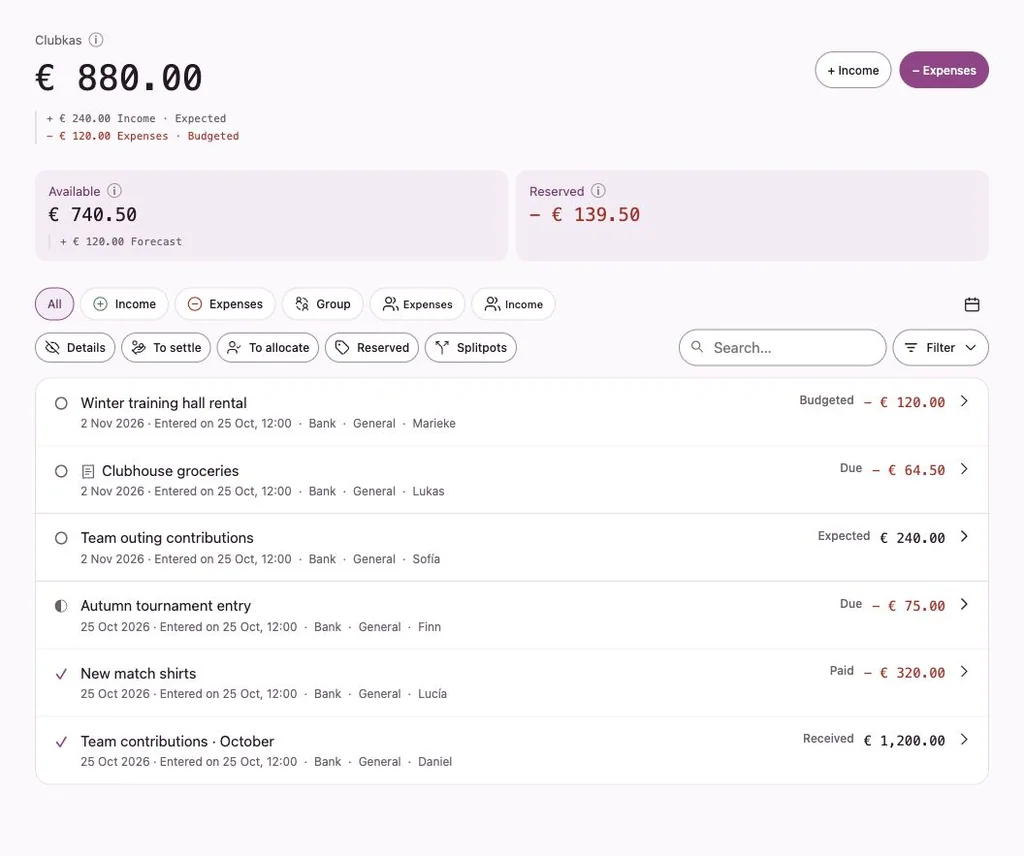
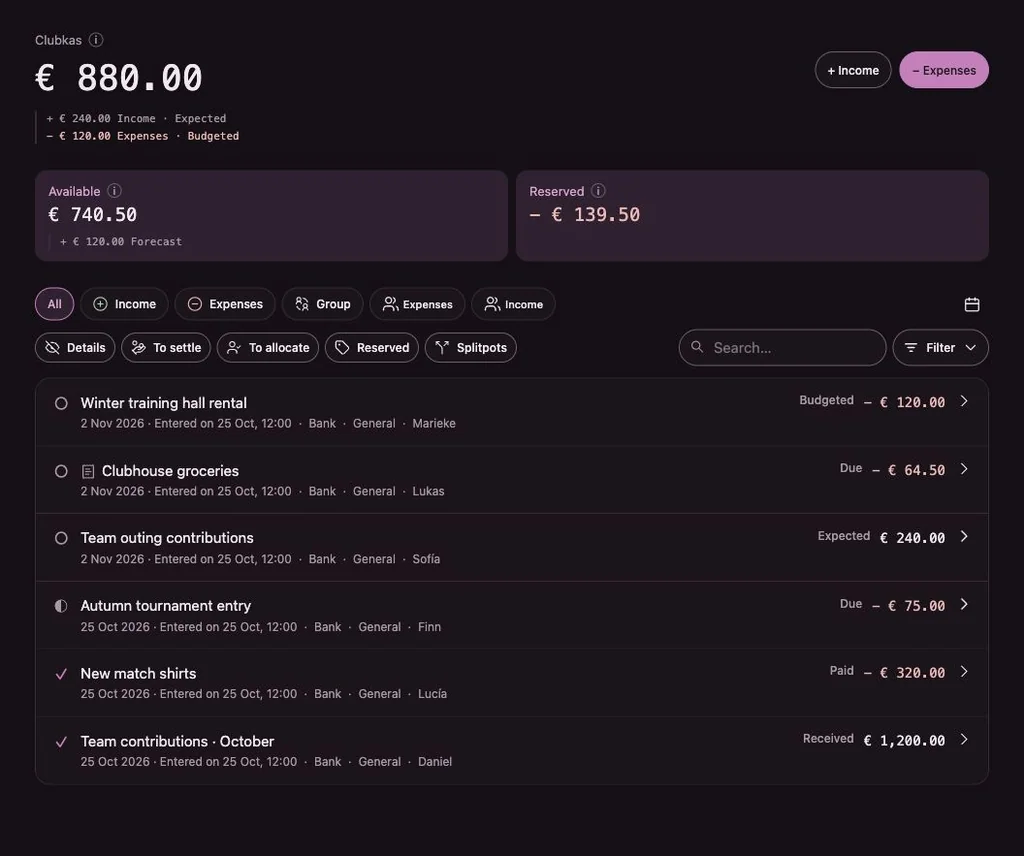
The group balance shows the money the group really has, wherever it is held. Next to it: Reserved for amounts the group still has to pay, and Available for what remains.
Three numbers
What each number means
- Group balance
- All group money recorded as held by the group’s money holders, added up: the cash box, a bank account, money someone looks after. It changes only when money really comes in or goes out.
- Reserved
- Agreed amounts the group still has to pay to suppliers and members, such as an accepted expense claim. Budgeted expenses and expected shares are not included.
- Available
- The group balance minus Reserved. It may be negative: that is a signal for the group, not a hidden debt for whoever holds the money.
- Expected changes
- Under the balance you see separate plus and minus lines for expected income, expected expenses and expected contributions. They show where the balance is heading if everything goes as planned.
Expected versus real
Plans don’t change today’s numbers.
An expected item, like the venue hire for next month’s concert, doesn’t change the current balance. It appears as an expected change beneath it. When it becomes real, you record the actual amount and date, and it counts once.
The outlook assumes that all open expectations happen and that open contributions are paid. It doesn’t predict the order of payments or a bank balance on a given day.
- Expected plus and minus lines are shown separately, never netted
- Closing an expectation keeps it in the history
- Clicking a number opens the transactions behind it
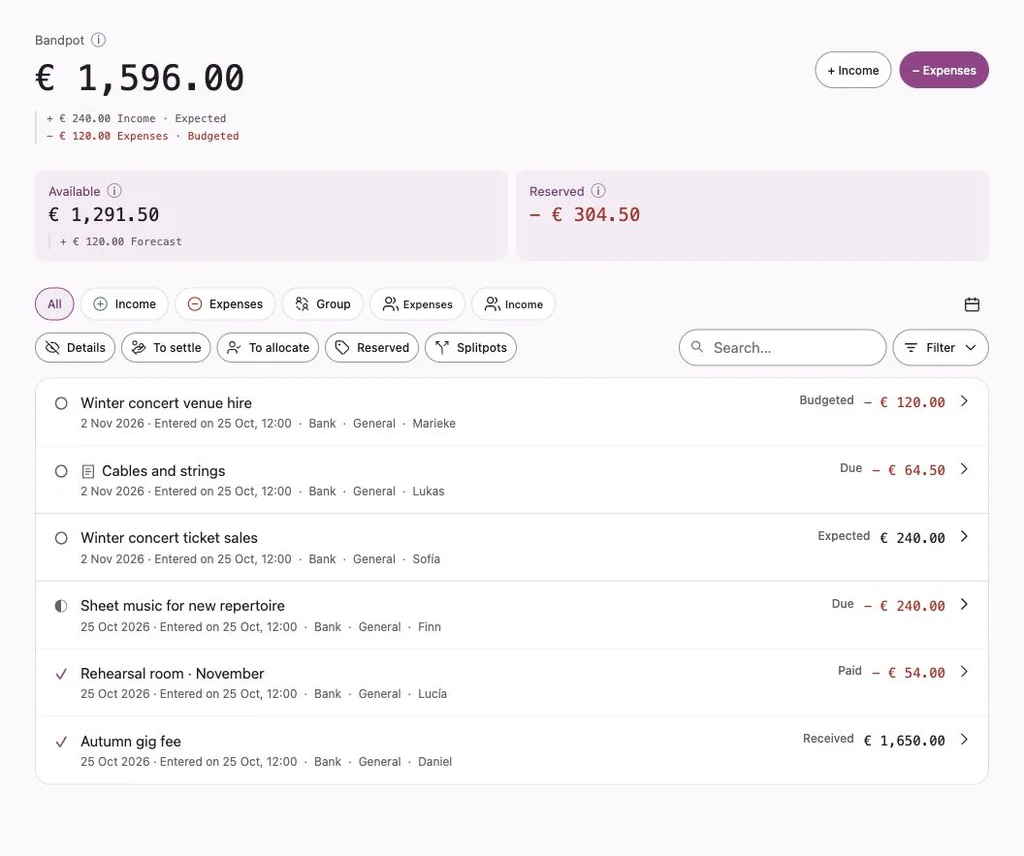
The balance is only as accurate as what the group records. Penny Monet doesn’t read bank accounts, so a cash difference or opening balance is recorded explicitly, with a reason.
Keep exploring
Try it with example data.
The example runs in your browser with made-up data. Nothing is saved.
