

Group pots
Group money is held by people.
A cash box with the team manager, a bank account in the treasurer’s name. In Penny Monet each money holder has a pot. Together the pots make up the group balance.
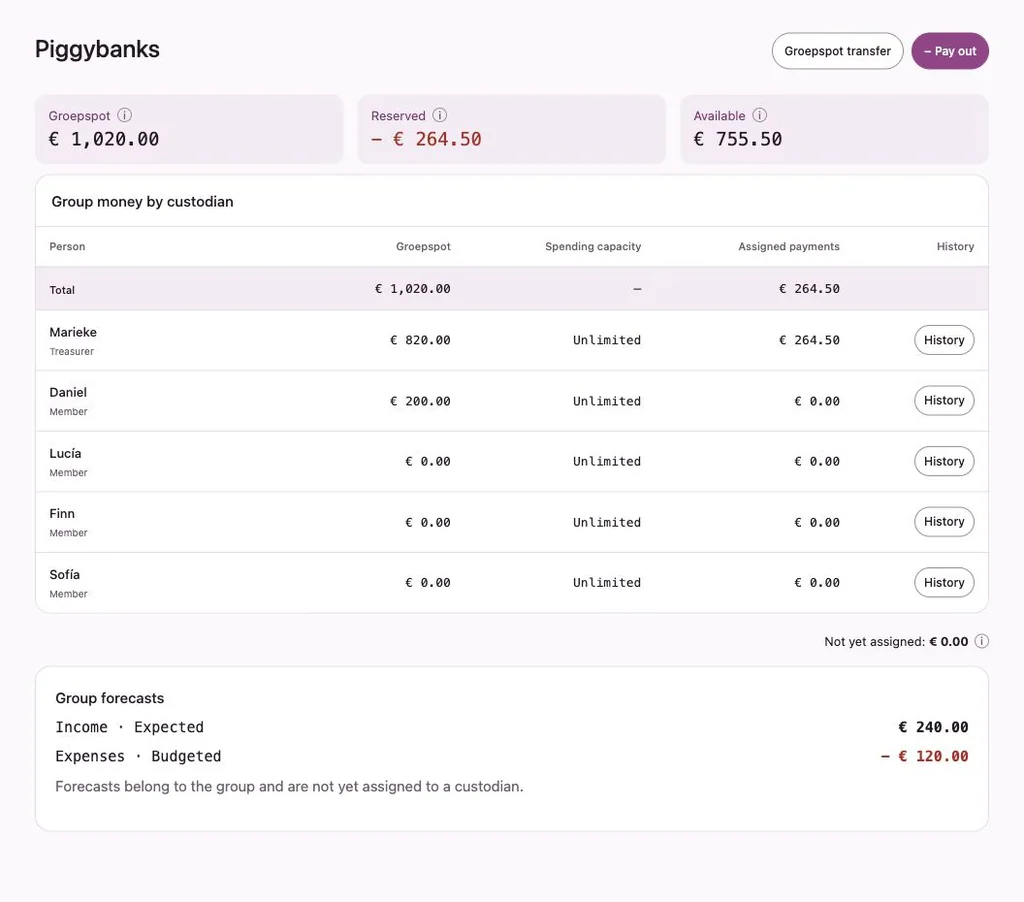
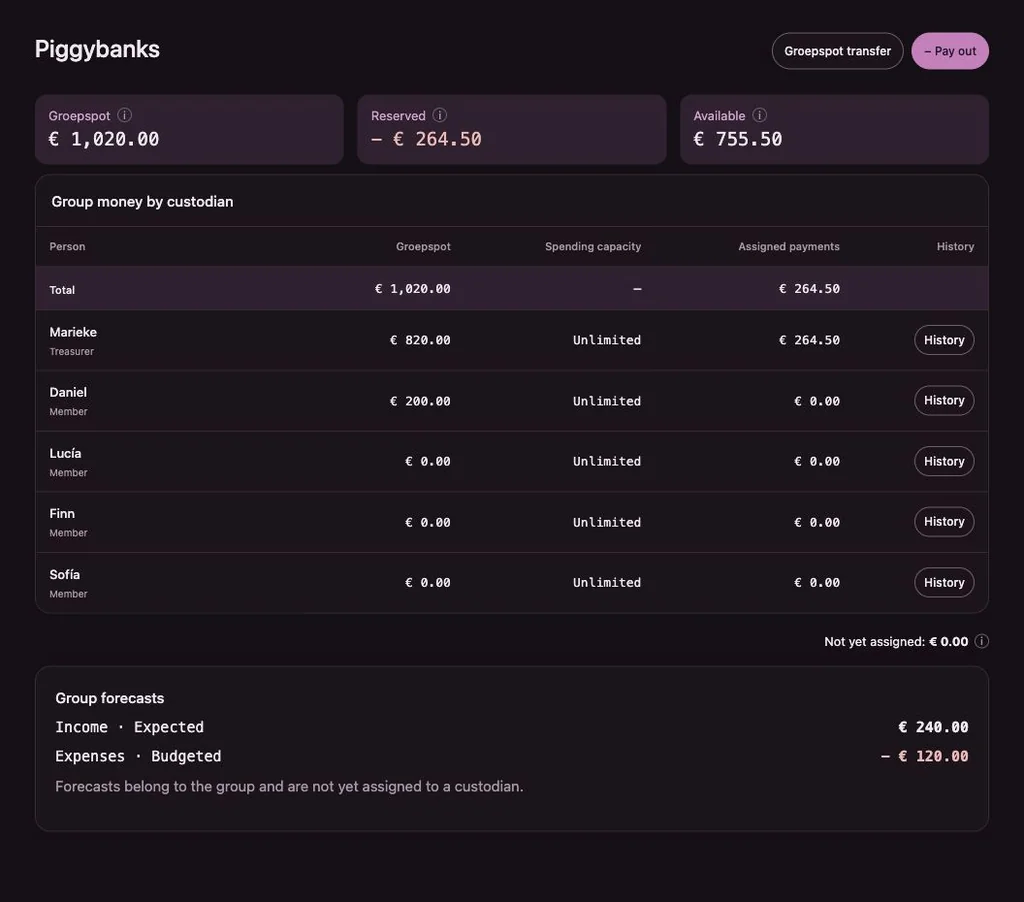
Holders
Who holds what, at a glance.
When money comes in, you record who received it, so it lands in their pot. When the group pays something, you choose whose pot it comes from.
A pot is group money held by that person, not their personal credit. A member can hold group money and be owed money by the group at the same time; Penny Monet keeps both apart.
- Transfer: money moves from one holder to another; the group balance stays the same
- History: every pot shows each movement with the balance before and after
- Members and treasurers can view all pots of their group; guests can’t
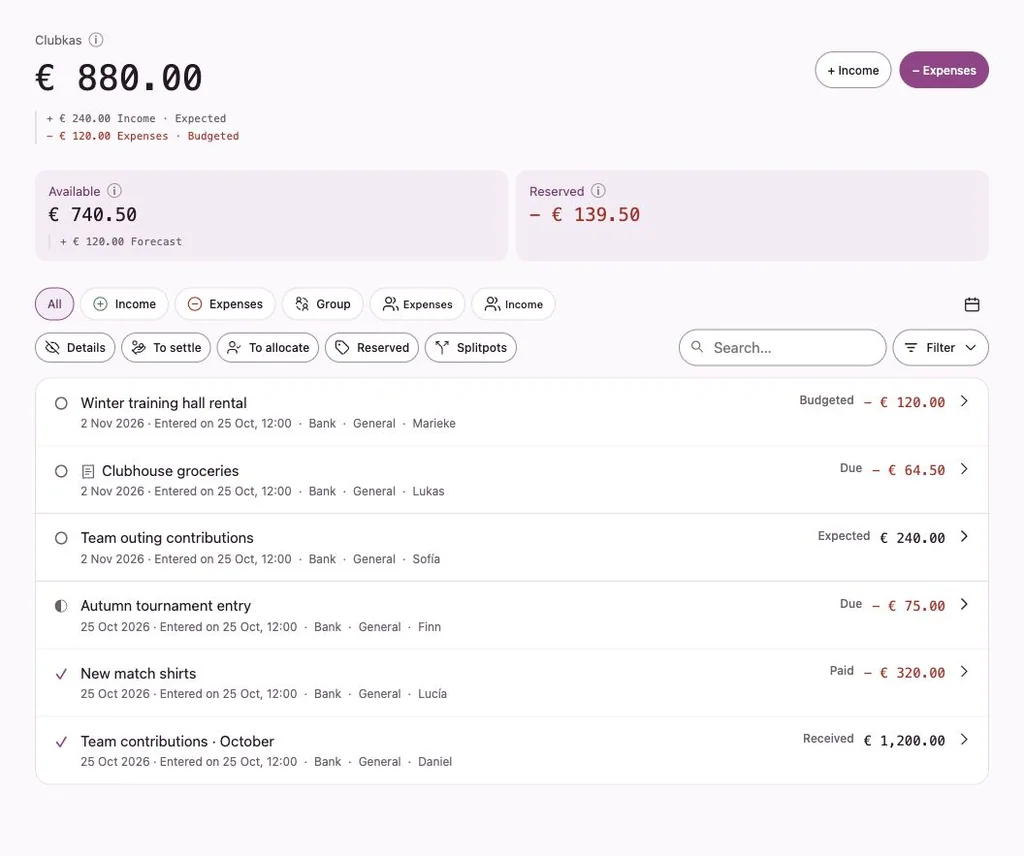

Payouts and limits
Awarding money and going into the red
Payouts
A payout awards group money to members, for example prize money or a refund. Awarding moves no money yet: each person gets an open credit, and the actual payment follows from a chosen pot.
Overdraft per pot
By default a pot can’t go below zero. A treasurer can allow pots to go into the red, with or without a limit per pot. A negative pot means the holder advanced money for the group.
Money in a pot is pooled. An expense isn’t linked to one particular income item, just like real cash in a box.
Keep exploring
Try it with example data.
The example runs in your browser with made-up data. Nothing is saved.
