

Use case
What you’re owed and what you owe, kept apart.
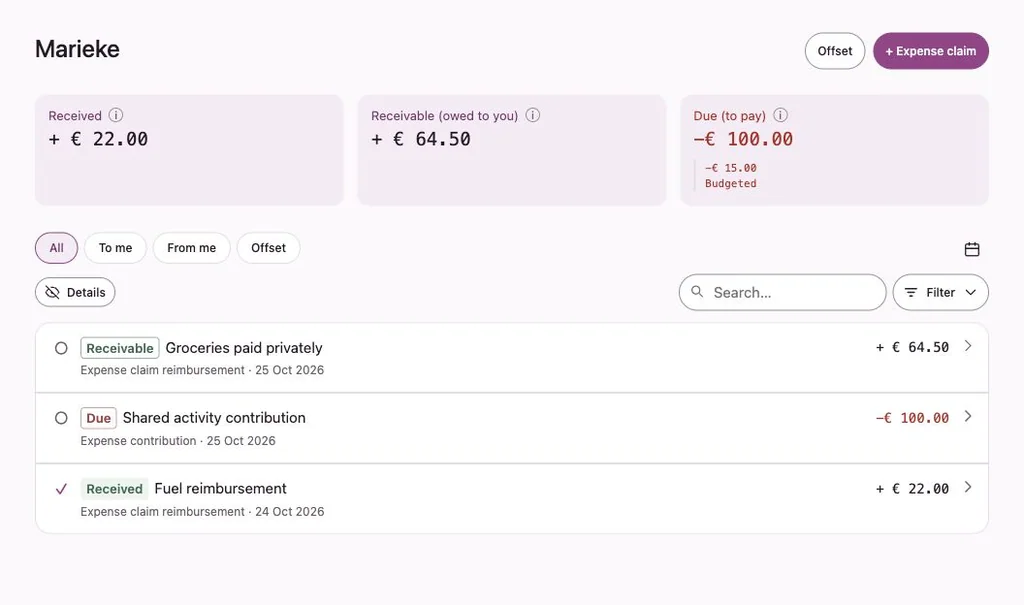
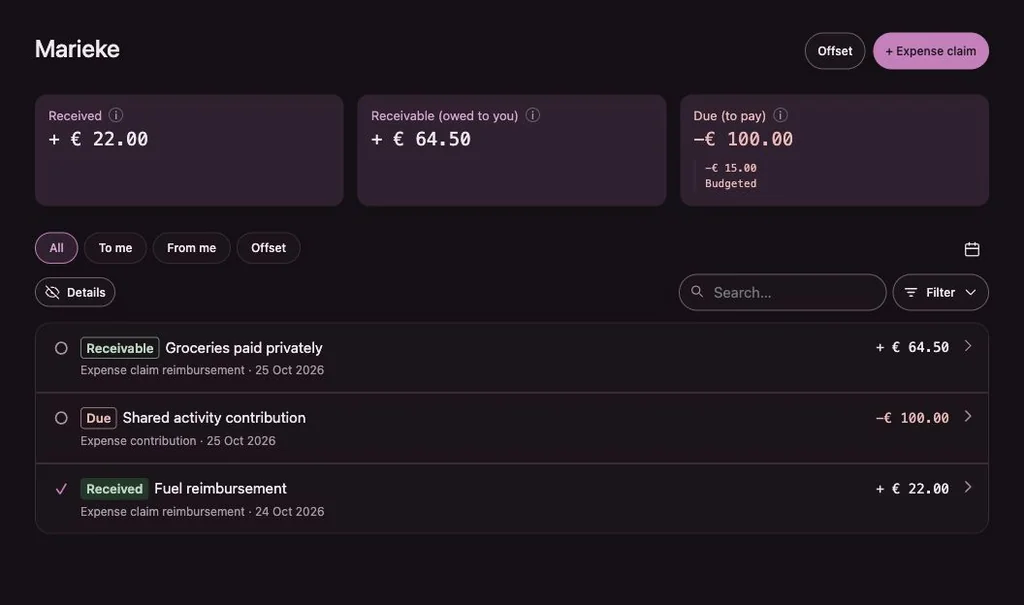
Many tools show one net number per person. Penny Monet deliberately doesn’t: a credit and a debt each stay visible, with their own source, until they are paid or offset on purpose.
Why separate
Clarity over convenience
- Each item has a source
- A debt refers to the expense it came from; a credit to the claim or payout behind it. You can always see why.
- Expected stays separate
- Expected credits and contributions are shown apart from what is actually due.
- Offsetting is a decision
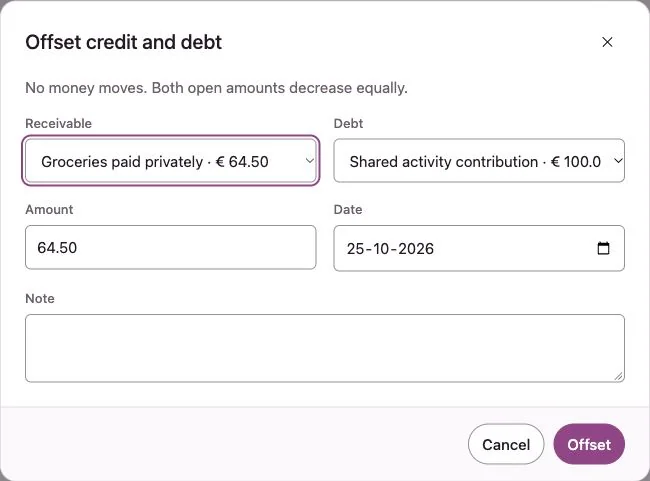
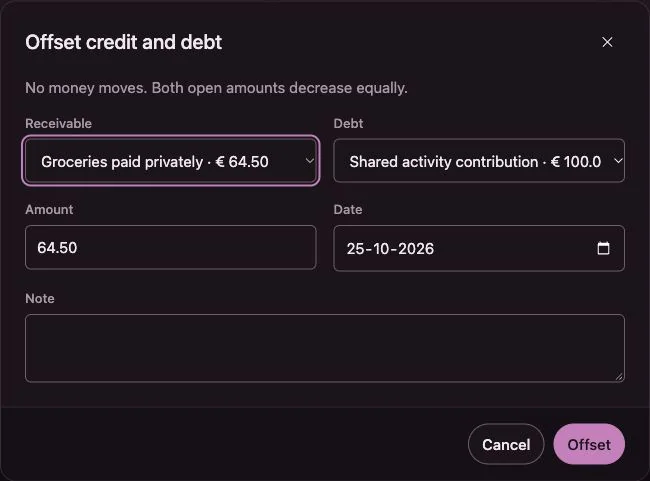
- If a credit and a debt should cancel out, an authorised person offsets them explicitly. That stays on the record.
- Groups don’t mix
- Your position in one group never affects another group.
In practice
Eva advanced fuel and owes for her kit.
Eva has a credit of €14 and a debt of €60. Both appear in her overview. The treasurer offsets €14: her credit is settled and €46 remains due. No money moved and the group balance is unchanged.
Keep exploring
See it with example data.
The example runs in your browser. Split an expense and watch each person’s position change.
