

Team
One team. One clear record.
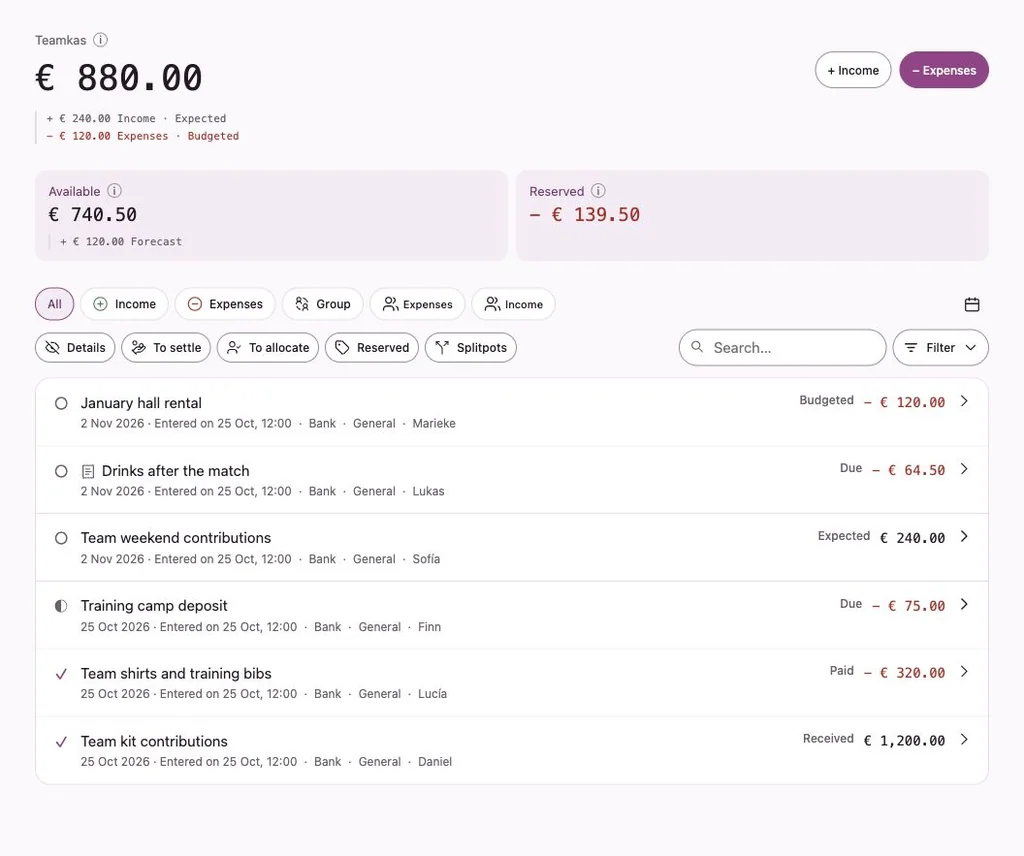
A training weekend, shared equipment or a team outing: record who paid and which contributions are still due. The hockey team is an example; the same record works for other kinds of teams.
What your team shares
Team contributions
Record agreed contributions and partial payments, so nobody has to reconstruct the amounts from the group chat.
Someone paid privately
An expense paid privately and its reimbursement remain separately identifiable.
Upcoming activities
Keep budgeted expenses and expected contributions separate from what has already happened.
A Teamkas, in your own words.
Here the group balance is called Teamkas and money holders’ positions are called Potjes. These labels are group settings. A pot shows who holds group money; it is not a separate savings account.
A training weekend, clearly recorded
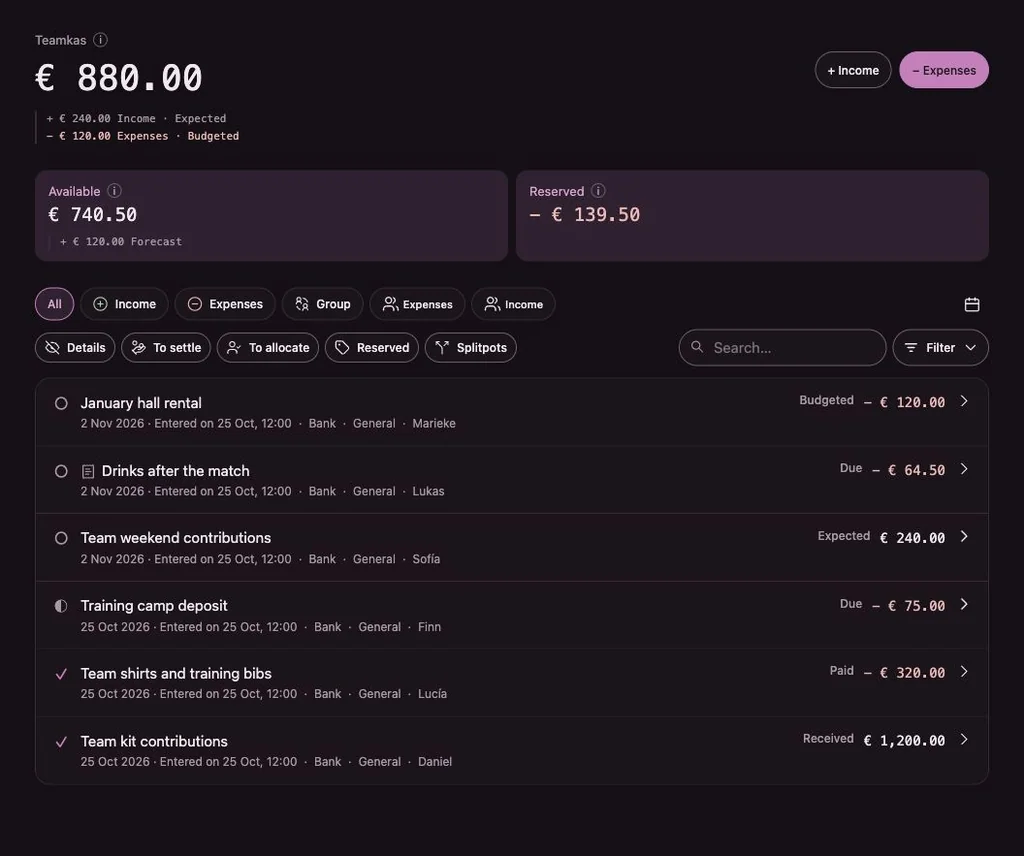
Team contributions, a deposit and hall rental appear together. Status and amounts show what still needs to happen.
In this example the group balance is called Teamkas and money holders’ positions are called Potjes. These are group settings. Their meaning stays the same: who holds the group’s money?
Keep exploring
Try it with example data.
