

Bands & music societies
Rehearsals, gigs and sheet music, in tune.
A cover band splitting the van rental, an orchestra with a concert budget, a choir buying new sheet music. Penny Monet keeps track of who paid for what, what comes in and what is still due.
Typical money matters
What musicians share
Rehearsal space
Monthly rent from a supplier, recorded as unpaid until the treasurer pays it.
Sheet music
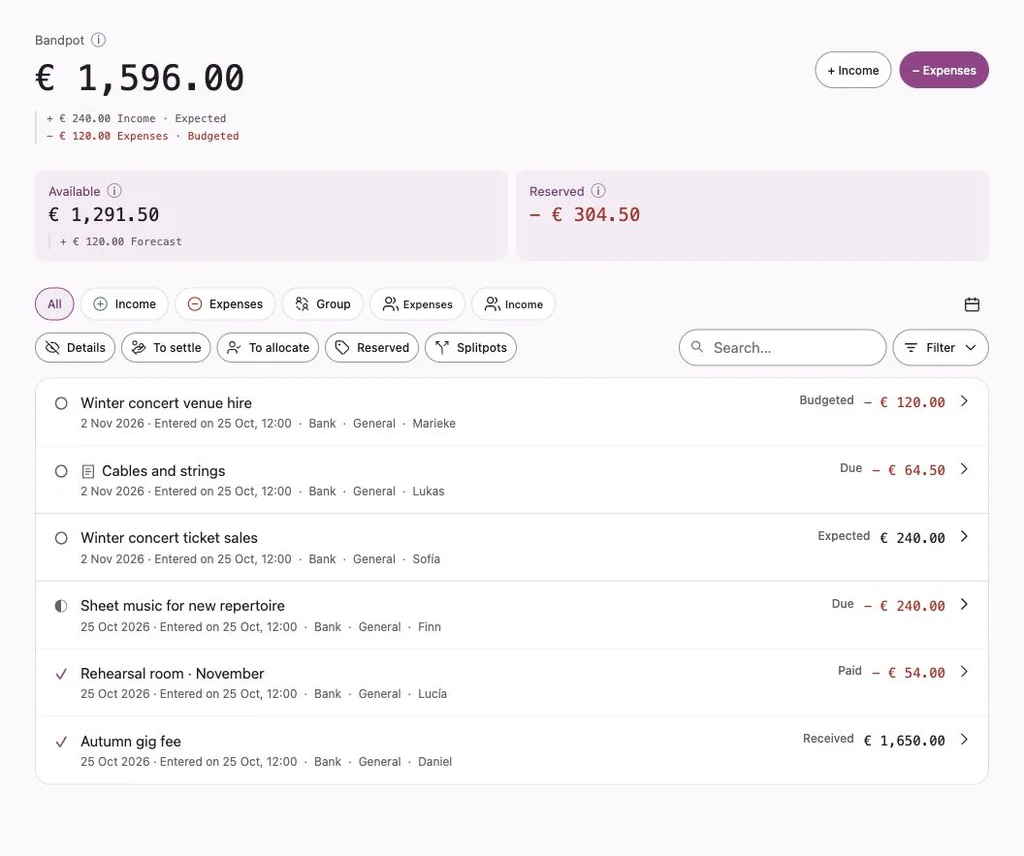
Bought by one member, claimed back from the group with a clear description.
Concerts and gigs
Venue hire and ticket sales as expected items, so the outlook is clear before the night.
Transport
Van rental and fuel for a gig, split over the band members who came.
Gig fees
Income from a booking, kept by the group or paid out to the musicians.
Sections and projects
A separate Splitpot for a project orchestra or a band trip.
Example
A band before its winter concert
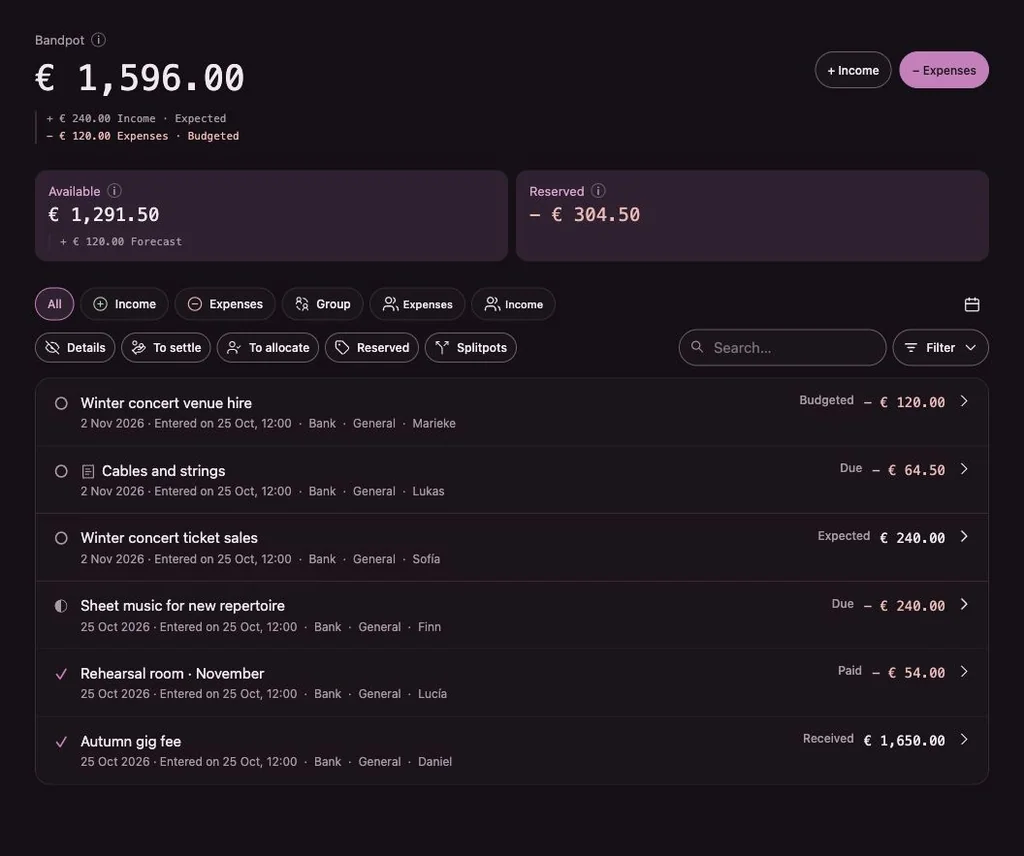
Made-up data: ticket income and venue hire are expected; the sheet music has been repaid to the member who bought it.
Payouts
Paying out a gig fee.
When a booking pays well, the band may decide to pay part of it to its members. A payout awards an amount to each person as an open credit; the actual payment follows from the pot of whoever holds the money.
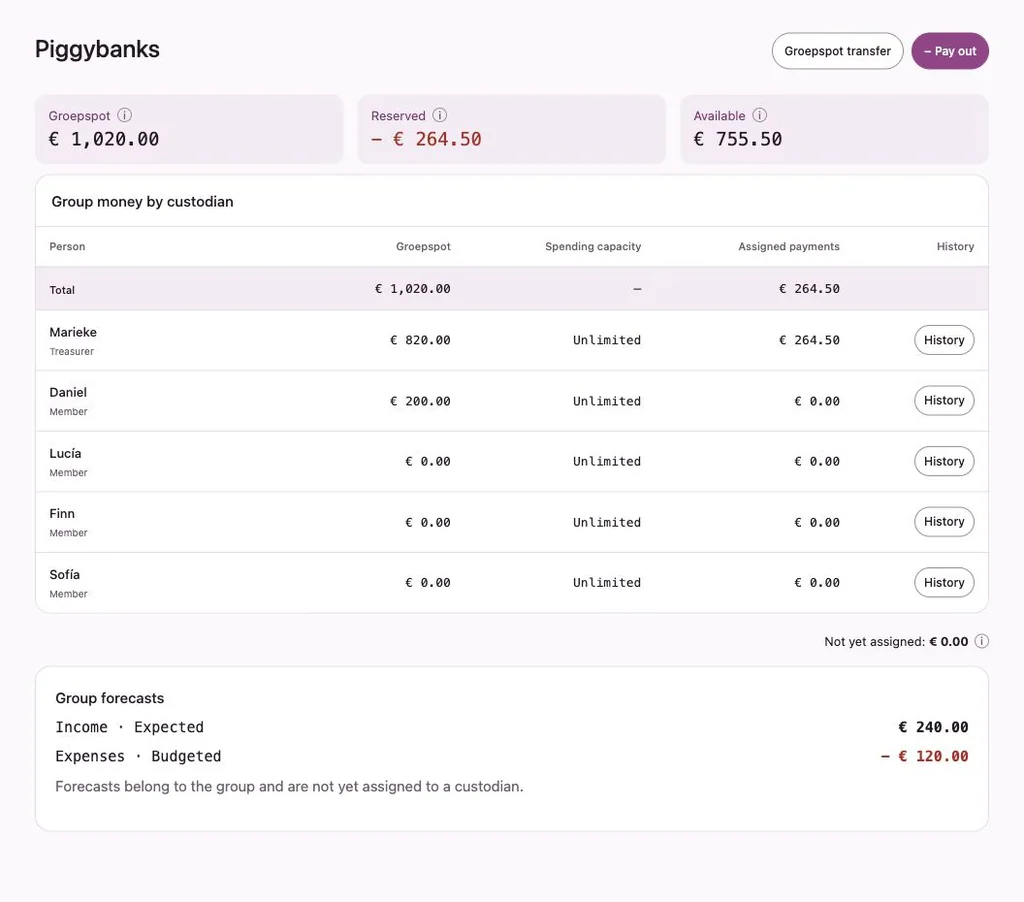
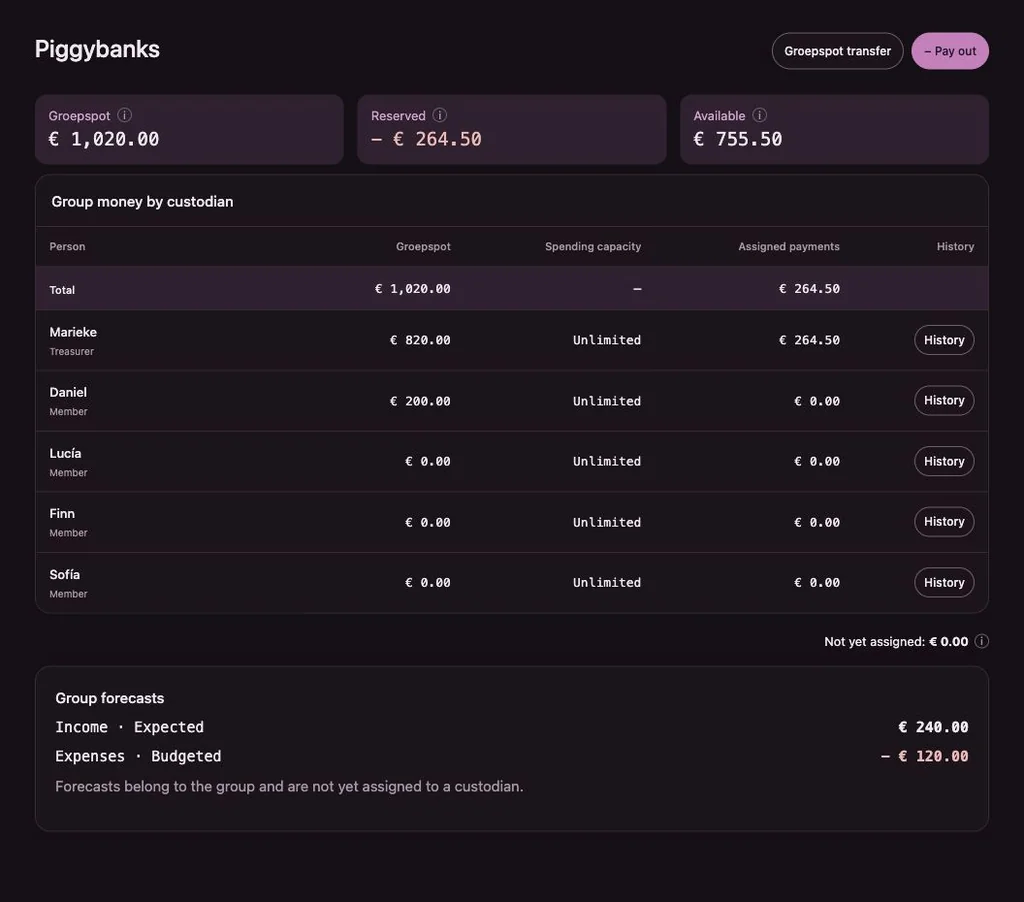
In this example the group balance is called Bandpot and money holders’ positions are called Enveloppen. These are group settings. Their meaning stays the same: who holds the group’s money?
Keep exploring
Get the band’s money in harmony.
See what this looks like with example data, or read how the flow works.
